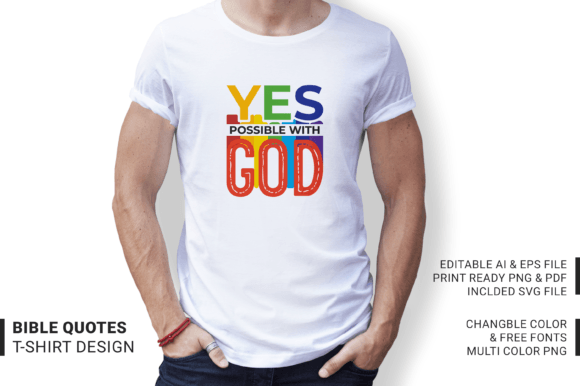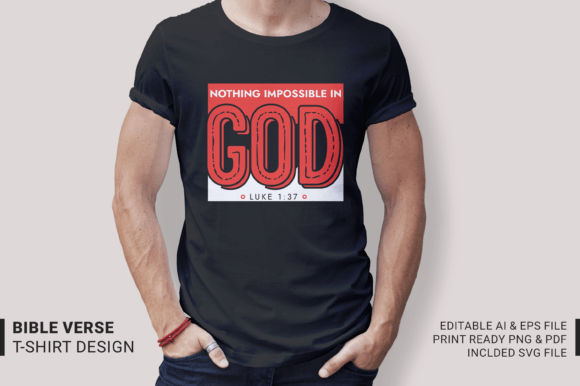
Luke 1 37 – Nothing Impossible with God
When I first opened this machine embroidery design, the title alone set the tone before I even saw the stitch file. Luke 1 37 – Nothing Impossible with God carries weight in the faith-based market, and as someone who has stitched hundreds of religious designs for custom apparel and handmade products, I can tell you that delivering that message cleanly in thread takes more than a pretty font. This design lands in the T-Shirt Designs category, but after working with it across several projects, I think it belongs on a much wider range of products. Let me walk through what this file actually does on a machine, where it fits best, and where you need to be careful before stitching it for a client or your own shop.
A Design That Reads Like a Statement
The first thing that struck me about Luke 1 37 – Nothing Impossible with God is how balanced the layout feels. It is not overcrowded, and the wording sits in a way that keeps the eye moving naturally from the scripture reference to the affirmation. That matters in embroidery, because a design that fights for space inside a hoop usually ends up looking cramped after the first wash. This one breathes. The lettering is clear without being overly delicate, which tells me the original digitizer understood that thread needs room to settle. The mood is confident, warm, and grounded. It does not try to shout. It states something quietly powerful, and that makes it versatile for both personal gifts and commercial inventory.
Visually, the design leans on a classic serif-style treatment that feels traditional without feeling dated. I have seen too many faith-based embroidery files that lean into ornate curls and thin strokes that just do not hold up on a sweatshirt or a tote bag. This one avoids that trap. The letterforms are substantial enough to read from a few feet away, yet refined enough that they do not look bulky. If you are building a collection of design assets for a faith-based craft business, this file gives you a solid anchor piece that pairs well with crosses, floral accents, or simple borders.
Real Project Test: Tote Bags and Sweatshirts
I took Luke 1 37 – Nothing Impossible with God through two real scenarios to see how it performed outside the preview window. The first was a batch of canvas tote bags for a local church fundraiser. The client wanted something that felt substantial, not flimsy, and the design needed to stand out against natural canvas without getting lost in the weave. I hooped a mid-weight cotton tote with a cutaway stabilizer and used a medium gray thread against the cream fabric. The satin stitch edges on the lettering came out crisp, and the fill areas settled flat without puckering. The overall look was clean enough that the client immediately ordered another dozen for their small shop merchandise. That is the kind of reaction you want when you are testing a new file.
The second test was a personal project: a pullover sweatshirt in a deep navy blue. I used a white thread with a slight sheen, and I was curious whether the thinner fabric of a fashion sweatshirt would cause any tunneling or distortion. I used a tearaway stabilizer with a light fusible interfacing on the back, and the design ran smoothly. The lettering sat flat even on the slightly stretchy knit, and after a machine wash and dry, there was no lifting or shrinkage around the stitches. If you are an Etsy seller looking to offer faith-based custom apparel, this design holds up well on both structured and soft fabrics, which is exactly what you need for a reliable product line.
Where This Design Shines in Your Product Line
After testing it on several substrates, I can confidently say Luke 1 37 – Nothing Impossible with God works beautifully across a range of handmade products. Here is what I found most effective:
- Sweatshirt embroidery – The design sits naturally on the left chest or centered on the back. It reads well in both placements.
- Tote bag design – Center hoop on a standard canvas tote gives a boutique feel without extra fuss.
- Baby embroidery – On a onesie or receiving blanket, the message feels appropriate and gentle. Just check your hoop size for smaller garments.
- Embroidered patch – If you make patches for iron-on or sew-on use, this design locks into a patch format nicely. The lettering stays readable at patch scale.
- Holiday embroidery – It works for Christmas, Easter, or any faith-based holiday gift. The message is timeless, so it sells year-round, not just in one season.
- Pillow cover and kitchen towel – A simple hoop on a linen pillow or a tea towel turns a basic item into a personalized gift that customers perceive as high-value.
- Caps and hats – I tested it on a structured cap with a curved hoop. The design needed a slight size adjustment to fit the curve, but once dialed in, it stitched cleanly. Be careful with dense areas on curved surfaces.
If you run a small shop product line or sell digital embroidery file bundles, this design also works well in printable mockup shots because the layout photographs clearly. Customers browsing your Etsy seller listings will immediately understand the size and placement from a good mockup.
Where to Use This Design Carefully
No design is perfect for every surface, and Luke 1 37 – Nothing Impossible with God has a few limits I want you to know about before you load it into your machine.
- Small hoop sizes – If you are working with a 4x4 hoop, the design may need scaling down, and that can compress the lettering. I recommend a 5x7 hoop for the best readability, especially if you are selling finished items and want the text to feel generous, not cramped.
- Thin or stretchy fabric – Lightweight knits and single-knit t-shirts require careful stabilizing. Use a tearaway or washaway stabilizer with a topper if the fabric has nap or stretch. Test a sample before stitching on a customer's garment.
- Dark fabric – The design uses open areas that can let dark fabric show through if your thread is too light or your stitch density is low. I always run a small test on dark fabric first and sometimes increase the underlay to prevent gaps.
- Dense stitch areas – The fill areas are moderate, but if you are stitching on a very thick fabric like fleece or heavy denim, you may need to reduce stitch density slightly to avoid thread breaks. Check your machine's tension before running a full batch.
- Layered garments – On jackets or hoodies with thick seams, avoid hooping directly over zippers or pockets. The design works best on flat panels.
Practical Notes from the Worktable
After running Luke 1 37 – Nothing Impossible with God through a few rounds of testing, here is my checklist for anyone planning to use this file in a commercial embroidery setting or for handmade product sales:
- Test on scrap fabric first. Every thread brand and fabric type behaves differently. I use a scrap piece of the same material to confirm thread colors and tension before the real piece.
- Check thread color contrast. On a white or cream background, a dark gray or navy thread gives the words gravity. On dark backgrounds, a warm white or gold thread keeps the message readable without looking harsh.
- Review stitch density. If the file feels too tight in the preview, reduce density by a small percentage. Dense lettering can cause puckering on lightweight fabric.
- Confirm hoop size. Make sure your hoop can accommodate the full design without forcing the fabric into tight corners. A 5x7 or larger is ideal.
- Inspect small details. Zoom in on the letter joints and serifs. If any thin areas look fragile, add a light running stitch underlay to stabilize them.
- Test in black and white mockups. Before offering the design to customers, see how it reads in grayscale. If the lettering blurs together in black and white, it may need spacing adjustments.
- Compare light and dark fabric backgrounds. The same design can look dramatically different on a white tee versus a black hoodie. Stitch one sample of each for your portfolio.
- Use proper stabilizer. Cutaway for knits, tearaway for wovens, and a topper for napped fabrics. Skimping on stabilizer ruins the best digitizing work.
- Check licensing. Before you sell finished items or include this design in a digital bundle, confirm that your license covers commercial embroidery use. Some design assets are for personal use only, and you do not want to run into issues with a wholesale order.
Commercial Value and Customer Trust
In my experience, faith-based embroidery designs sell consistently when they are legible, well-digitized, and versatile. Luke 1 37 – Nothing Impossible with God checks those boxes. The message resonates with a wide audience, and the layout works at a scale that feels substantial on finished products. When I placed it on a tote bag for the fundraiser, multiple people asked where they could buy one. That tells me the design has giftability and recognition built into it. As a creative entrepreneur or apparel decorator, you want files that generate that kind of response without extra marketing effort.
For boutique branding and craft fair products, this design also carries a professional look that builds customer trust. It does not look like a quick applique or a home-hobby stitch. It looks like a product you would buy from a curated shop. If you are building a brand around faith-inspired merchandise, having this in your catalog gives you a piece that feels intentional. It also works well as a wedding gift or a holiday gift when paired with a simple cross or a heart accent.
One thing I appreciate is that the design does not rely on trendy fonts that will look dated in a year. The lettering is classic enough that it will still feel relevant five years from now. That matters for digital product sellers who want their embroidery file inventory to have a long shelf life. Trends fade, but a well-made design with a timeless message keeps selling.
Final Thoughts Before You Stitch
Luke 1 37 – Nothing Impossible with God is a design I would use again for both personal and client projects. It delivers on the promise of clean, readable lettering, it adapts well to different fabric types, and it carries a message that people connect with emotionally. That combination is hard to beat in the machine embroidery design space. If you are an Etsy seller, a small business owner, or a hobbyist looking to expand your faith-based offerings, I recommend picking up this file, running a few tests, and seeing how it fits your product line. Just remember to verify your hoop size, choose your stabilizer wisely, and always stitch a sample before you sell a finished piece. That is the difference between a product that looks good in a preview and one that looks great in a customer's hands.
Whether you are making custom apparel for a local shop, stitching personalized gifts for the holiday season, or building a catalog of design assets for your digital storefront, this design earns its place in your rotation. It is practical, it is beautiful, and it reminds everyone who sees it why the message still matters.